Entice - a textiles exploration
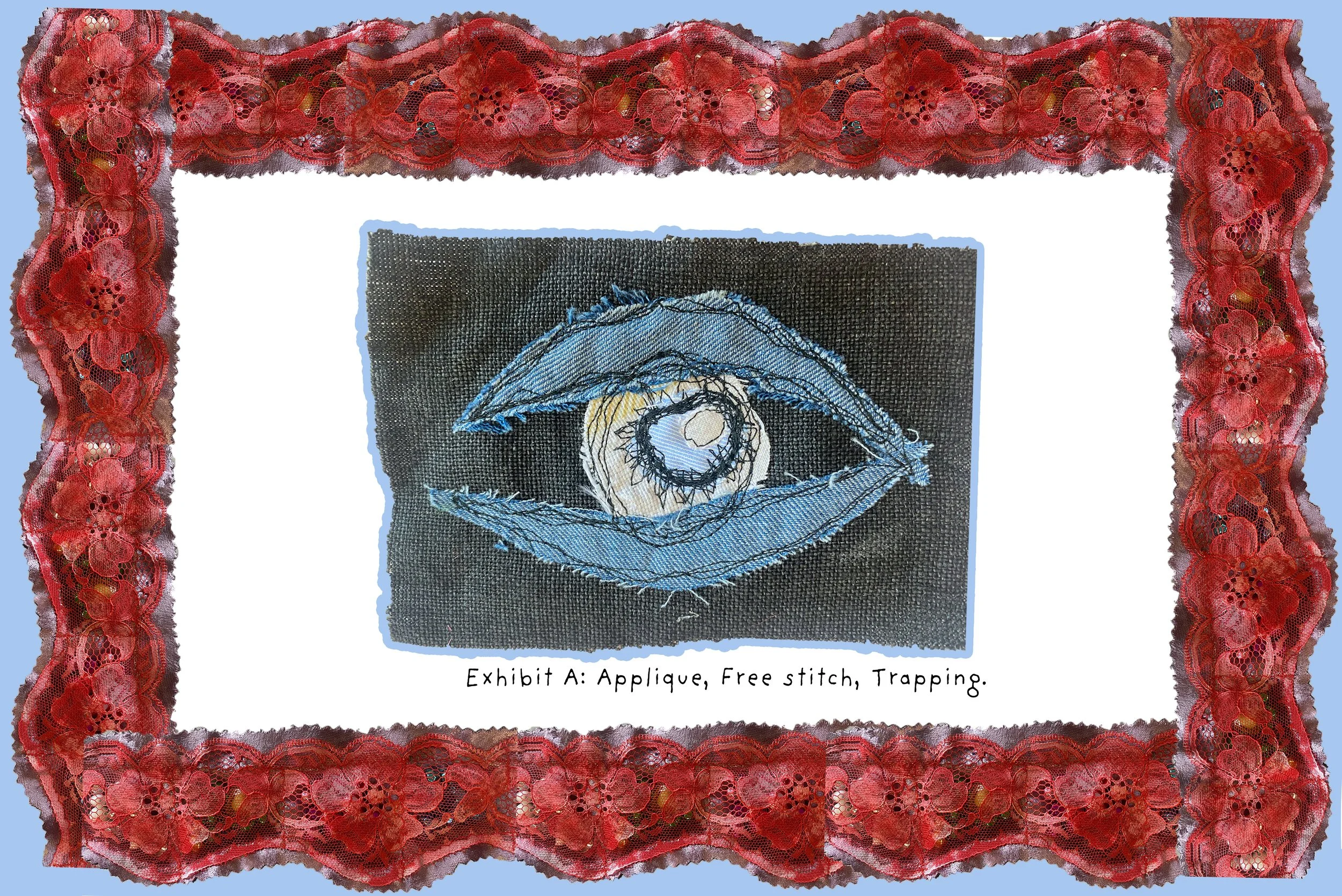
This body of work began as an exploration of how textiles can hold weight that words often can't. Human trafficking, its violence, its organ trade, its sexual exploitation, is a subject usually kept at a distance, discussed in statistics rather than felt in the body. I wanted to bring it onto the body instead, using fabric manipulation as a language of restraint, wound, and erasure.
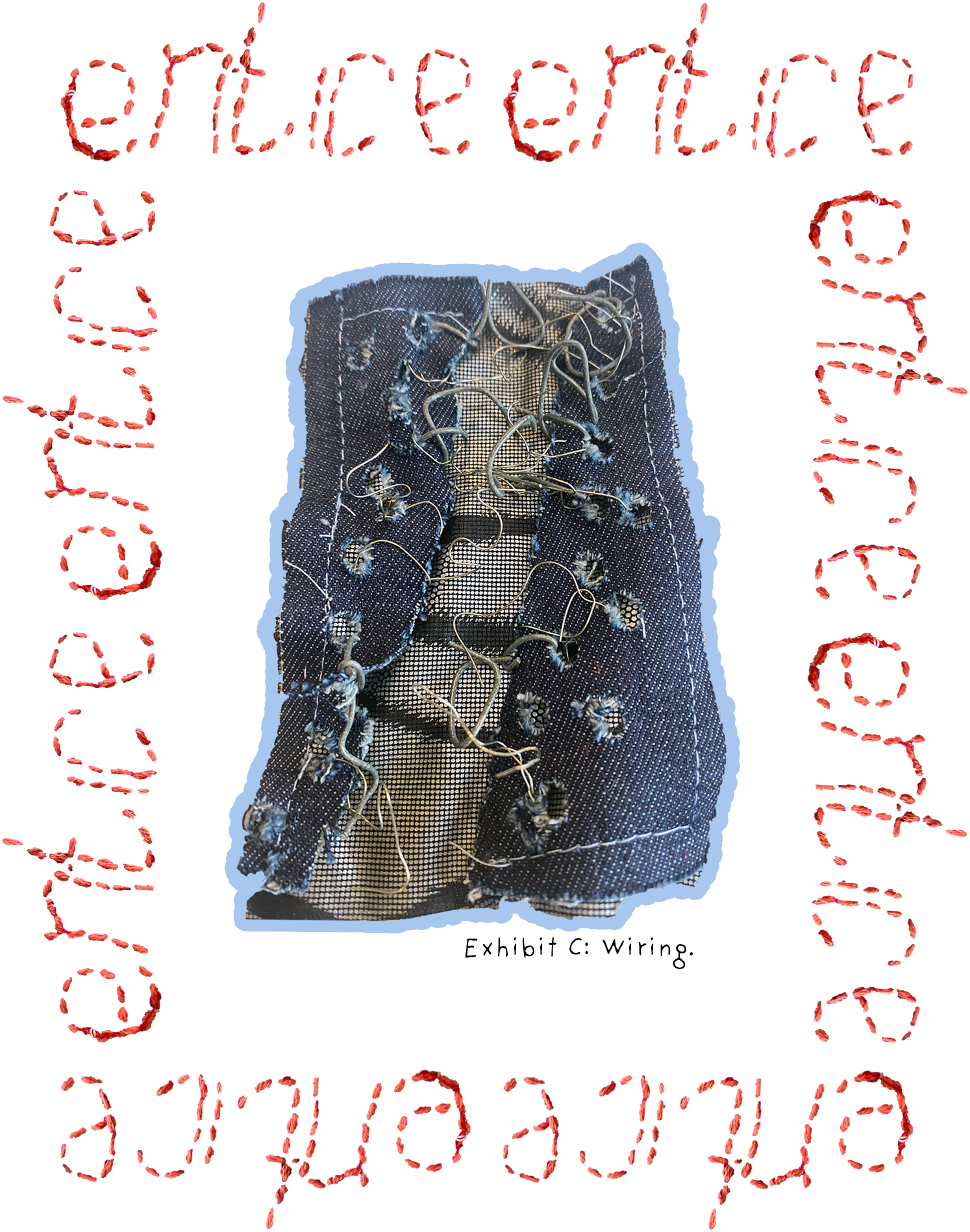
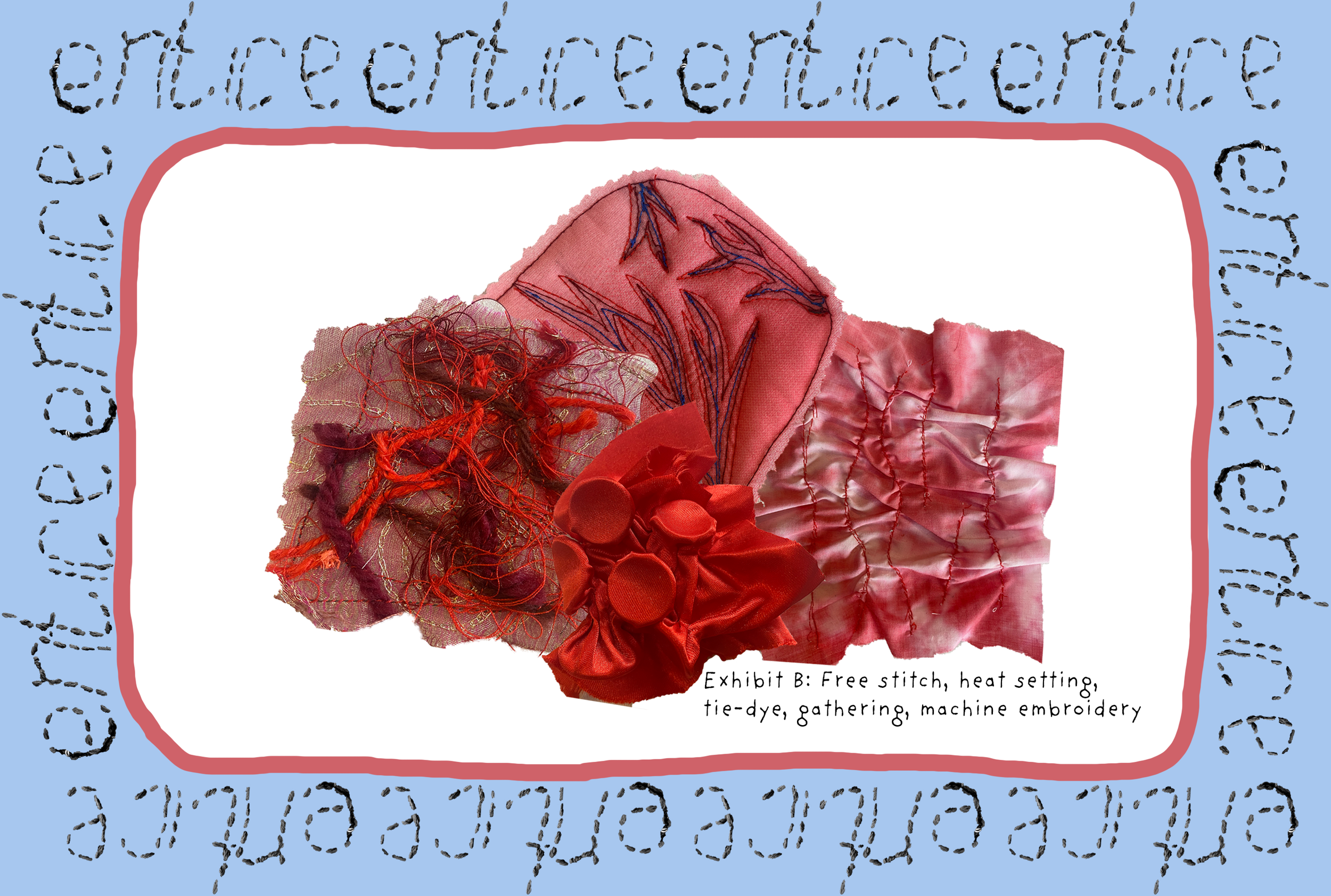
The red pieces use raw, unfinished edges and visible, almost surgical stitching to suggest bloodshed and the physical violation at the centre of organ trafficking. The fabric is not neatly cut but torn, then stitched back into something that still bears the evidence of harm. Elsewhere, wire is worked directly into the cloth, forcing a rigid, cage-like structure onto material that should move freely with the body. This is a way of expressing coercion and the loss of bodily autonomy that defines sex trafficking. Across the samples, I was less interested in resolution than in tension: softness fighting against restriction, decoration sitting uneasily beside damage.
Vivienne Westwood has always been central to how I think about design. Her belief that fashion could carry real political and historical weight, that a garment could be a protest as much as a product, permitted me to treat this research as design practice rather than illustration. Human trafficking is not a historical subject; it is arguably more widespread now than ever recorded, having simply changed shape, moving from visible, physical trafficking routes into hidden, digital, and domestic forms that are harder to see and harder to stop. That invisibility felt like the real subject of this project: not just the violence itself, but how easily it is worn, carried, and hidden in plain sight.